Tactile paving is widely used in modern infrastructure, yet many projects fail to deliver truly effective accessibility.
In practice, the problem is rarely the product itself — but how it is planned, selected, and installed.
Understanding the common challenges in tactile paving design is the first step toward creating environments that are not only compliant but genuinely usable.
1. Inconsistent Layout and Misleading Guidance
One of the most frequent issues in tactile paving systems is inconsistency.
In some projects, directional indicators suddenly change orientation, stop abruptly, or lead users into obstacles instead of safe pathways. This creates confusion rather than guidance.
Solution:
A clear and continuous layout must be established from the beginning of the design phase. Tactile paths should connect key points logically, such as entrances, exits, elevators, and crossings, without interruption.
A clear and continuous layout must be established from the beginning of the design phase. Tactile paths should connect key points logically, such as entrances, exits, elevators, and crossings, without interruption.
2. Incorrect Placement at Hazard Areas
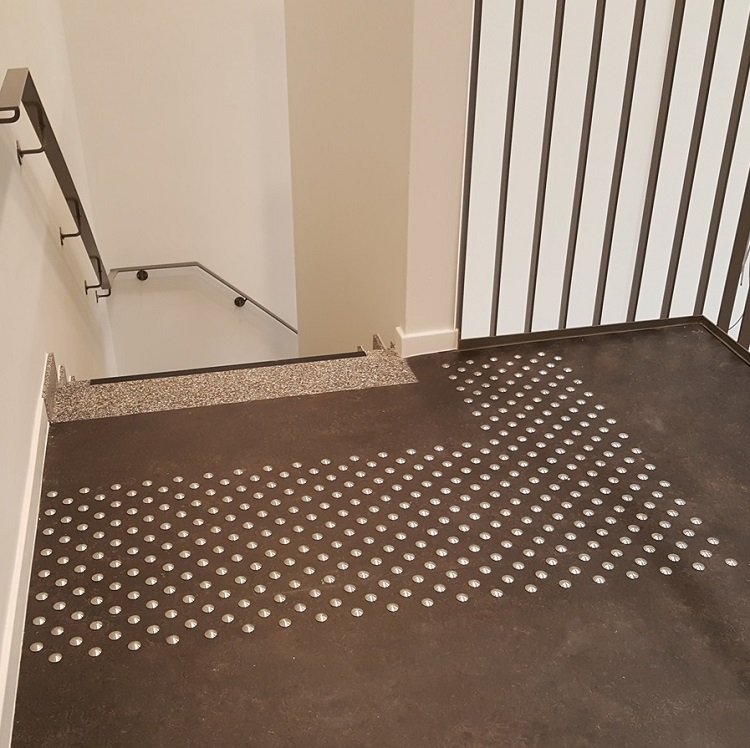
Warning indicators are often installed too far from hazards — or sometimes not installed at all, where they are most needed.
For example, platform edges, staircases, and ramp transitions require precise positioning to provide timely alerts.
Solution:
Indicators must be placed at standardized distances from hazards to ensure users receive accurate and reliable warnings at the right moment.
Indicators must be placed at standardized distances from hazards to ensure users receive accurate and reliable warnings at the right moment.
3. Poor Material Selection
Choosing the wrong material can lead to rapid wear, reduced slip resistance, or visual inconsistency with the surrounding environment.
Low-quality materials may degrade quickly in high-traffic areas, compromising both safety and appearance.
Solution:
Material selection should be based on real usage conditions:
Material selection should be based on real usage conditions:
High-traffic areas → prioritize durability (e.g., stainless steel)
Outdoor environments → ensure anti-corrosion and anti-slip performance
Design-sensitive spaces → consider aesthetic integration
4. Installation Issues Affecting Performance
Outdoor environments → ensure anti-corrosion and anti-slip performance
Design-sensitive spaces → consider aesthetic integration
4. Installation Issues Affecting Performance
Even high-quality tactile indicators can fail if installed improperly.
Common problems include: Uneven surfaces,Loose fixation,Incorrect spacing
These issues not only reduce effectiveness but may also create new safety risks.
Solution:
A precise and standardized installation process is essential. Quick-install systems that ensure strong fixation and accurate alignment can significantly improve project quality and efficiency.
A precise and standardized installation process is essential. Quick-install systems that ensure strong fixation and accurate alignment can significantly improve project quality and efficiency.
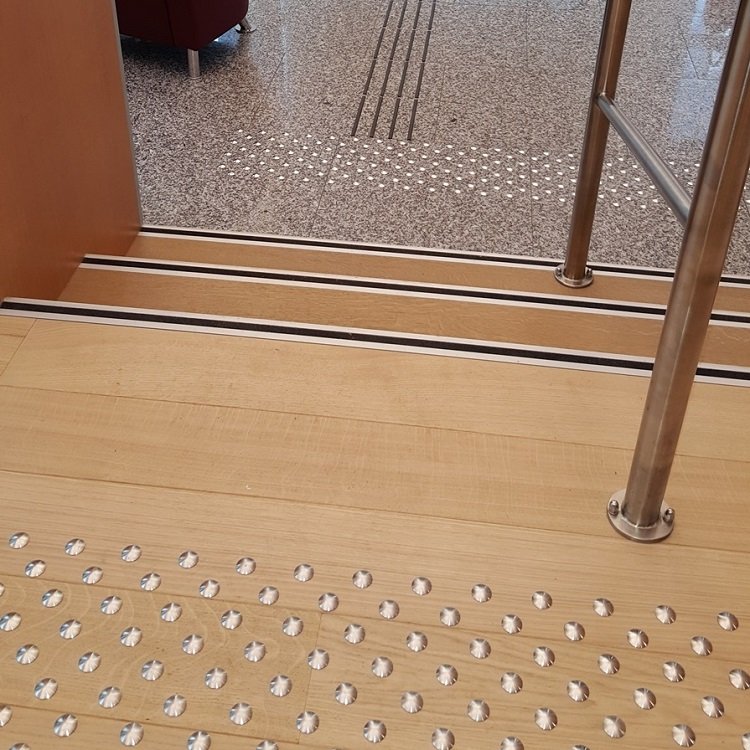
5. Lack of Integration with Overall Design
In some projects, tactile paving is treated as an afterthought — added late in the process without coordination with the overall design.
This often leads to poor alignment, visual clutter, or ineffective guidance.
Solution:
Accessibility should be considered from the early design stage. Tactile systems must be integrated into the architectural and landscape design to achieve both functionality and visual harmony.
Accessibility should be considered from the early design stage. Tactile systems must be integrated into the architectural and landscape design to achieve both functionality and visual harmony.
Applications That Demand Higher Standards
These challenges are especially critical in:
● Transportation hubs (airports, metro stations)
● Public infrastructure projects
● Commercial complexes with heavy foot traffic
● Urban pedestrian systems
In such environments, even small design flaws can significantly impact user experience.
Tactile paving is not just about meeting minimum standards — it is about delivering real usability.
By addressing common design and installation challenges, projects can move beyond compliance and create spaces that are safer, clearer, and more inclusive.
Well-executed tactile systems reflect a deeper understanding of accessibility — one that prioritizes both function and human experience.